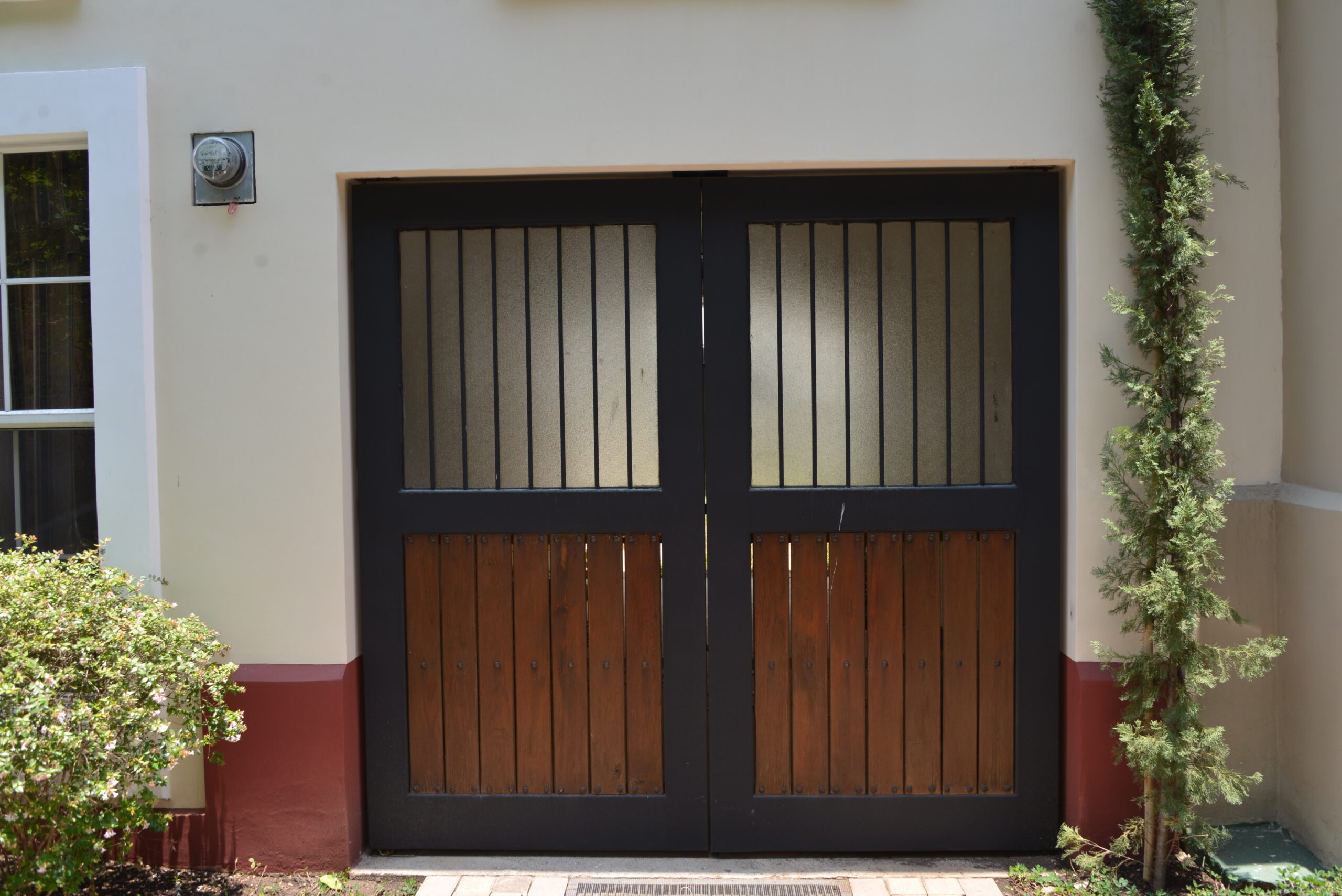
A failing garage door spring doesn’t just leave your car trapped inside (or outside): it’s one of the highest-tension parts in your entire home, and when it gives out, it can cause serious injury. Catching the warning signs early saves you an emergency repair — and more importantly, an accident.
Table of Contents
- Signs your spring is about to fail
- Why Texas weather speeds up wear
- Torsion vs. extension springs
- DIY repair or call a professional?
- Basic preventive maintenance
- Frequently asked questions
Signs your spring is about to fail
- The door looks crooked or opens unevenly: one side rises faster than the other.
- Loud “snapping” noises: usually the sound of a spring starting to give.
- The opener strains more than usual: if it takes longer or sounds louder lifting the door, the spring is no longer compensating for the weight correctly.
- Visible gaps or separation in the spring coils: a clear sign of advanced wear.
Why Texas weather speeds up wear
Sharp day-to-night temperature swings, common in Central Texas, cause metal to expand and contract constantly, shortening the lifespan of springs and moving parts faster than in stable climates. This gets worse during summer heat peaks, when garages can reach much higher temperatures than the outdoors.
Torsion vs. extension springs
| Feature | Torsion spring | Extension spring |
|---|---|---|
| Location | Above the door, on a horizontal shaft | On the sides, above the tracks |
| Average lifespan | 15,000-20,000 cycles | 10,000 cycles |
| Danger level if it fails | High (large stored tension) | High (can fly off without a safety cable) |
| Typical replacement cost | Medium-high | Medium |
For industry technical and safety standards, the Door and Access Systems Manufacturers Association (DASMA) publishes official guidelines on safe installation and maintenance of residential garage doors.
DIY repair or call a professional?
Torsion springs store a dangerous amount of energy — this isn’t a DIY project. Local companies like R&Y Garage Door Repair, serving Austin, Round Rock, Georgetown, and Central Texas since 2009, recommend an annual preventive inspection to catch wear before it becomes a full failure.
Basic preventive maintenance
Lubricating moving parts every six months, manually checking door balance (with the opener disconnected), and listening for any change in opening sound are simple habits that extend the life of the whole system. If you just moved to the area, check our guide for new Austin residents for more tips on settling into your new home.
Frequently asked questions
How long does a garage door spring last?
Between 10,000 and 20,000 cycles, roughly 7 to 12 years in a home with normal use.
Can I replace the spring myself?
It’s not recommended: torsion springs store enough energy to cause serious injury if handled without the right tools and technique.
What happens if I keep using the door with a damaged spring?
The opener wears out prematurely, and the risk of the door slamming down increases, creating a real hazard.
💬 Pregúntale a la IA sobre este artículo